Thursday, February 3, 2011

Pain In The Back Of The Knee: Top 3 Reasons

Here are some things you need to keep in mind if you ever experience such pain behind the knee:

1. Possible Arthritis

This is one of the most common causes of pain in the knee. In fact, if you are over the age of 65 one in two of you have arthritis with the knee been one of the most common joints involved.

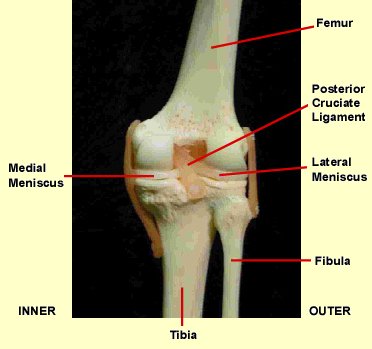
The pain of arthritis is usually a dull tooth ache pain that is occasionally sharp with sudden movements. The pain is usually located over your joint line (where the tibia meets the femur) and in the front of the knee. Mild and sometimes severe swelling is associated with this pain. The pain is worse when you exit a chair or car. It is also worse with any prolonged walking or standing. The pain is usually better with rest, heat (sometimes ice), wrapping the knee and pain medication.

Occasionally the knee may catch on the rough uneven surfaces of your cartilage. Patients often complain of grinding in the knee, and occasional popping.

2. Minor Tear of the Cartilage Surface

Rather then a cyst or fluid build-up, the causes of the pain behind the knee might simply be slight micro tears in the cartilage. This can be treated with the same solutions at the end of this article. Tears, if minor, require no surgery and will heal on their own depending on the time allowed for healing and if the activity that aggravates it is avoided.

3. Baker's Cyst

The cyst usually occurs due to some other problem in your knee such as arthritis or even a tear of your meniscus. The swelling from this problem causes fluid to build up in your knee. This fluid pushes out the weakest point of your joint capsule surrounding your knee. This is usually to the back portion of your knee capsule, and a cyst forms. The cyst has a valve made out of your joint capsule tissue. This valve can sometimes become clogged and the fluid becomes trapped in the cyst. Thus, even when the injury has resolved, you still have the swelling in the back of your knee. This is associated with pain usually described as dull and aching. The pain is worse with prolonged walking or standing. It is sometimes improved with rest, elevation and taking pain medication.


Many people agree that when it comes to pain behind the knee, the best plan of action is Control, Avoid, and Rehabilitate.

Control:

Cryotheraphy which involves putting ice on the area for 5 minutes at a time. This will help reduce the pain. Do not continue to apply ice if a burning sensation is felt.

Heat from a heating pad for 10-20 minutes on a lower setting may help reduce pain. Alternative methods include creams that create a heating sensation like Icy-Hot or AST BioFreeze gel.

Bracing from a comfortable knee brace can provide some needed relief and stability to the area, reducing the pressure on the area and thus; reducing the pain. There are many knee braces available that can be worn during activity or at any time where the area becomes bothersome.

Avoid:

There's nothing special about this old saying. Simply avoid the activities that aggravate the pain and participate in ones that seem to help it. Making a list of things NOT to do and a list of things TO DO will be helpful in determining what makes the pain worse. Avoid activities that continue to make the pain worse or no better. This is typical advice. Pain is a warning signal.

Rehabilitate:

Talk to a Doctor and make a plan of action to rehabilitate the knee thru controlled motions. Rehabilitation includes motivation to do the prescribed exercises. The correct exercises as prescribed and the proper equipment to keep the motions in controlled.

Pain behind the knee is very common in some many sports that you can suffer from this by doing almost anything from snowboarding to racquetball. By taking precautions in your sports and understanding what might cause this, will allow not only enjoyable sports activities, but a lifetime of activity.

Internet Explorer bug puts 900 million users at risk

Microsoft has announced that all current versions of Internet Explorer are currently at risk of being hacked due to a flaw in the programme.

It is now known that the web browser, used by 900 million people across the globe, requires a software patch in order to defend against attack while Microsoft prepares a longer term fix, a massive security slip up by the firm.

A security advisory announcement was made on Friday
highlighting scripting vulnerabilities affecting all versions of Windows.

It is not however thought that there has been any breaches of security so far: “The main impact of the vulnerability is unintended information disclosure,” said Angela Gunn, a Microsoft representative.

“We're aware of published information and proof-of-concept code that attempts to exploit this vulnerability, but we haven't seen any indications of active exploitation.”

The fault lies in the MHTML protocol handler, which is used by applications to render certain kinds of document.

According to the statement an attacker could, for example, construct an HTML link designed to trigger a malicious script and then persuade the targeted user to click on it.

Once this happens the script would then be able to run on the machine for the rest of that IE browser session, potentially collecting information from emails, sending the user to fake sites and generally interfering with the browser usage.

“The workaround we are recommending customers apply locks down the MHTML protocol and effectively addresses the issue on the client system where it exists. We are providing a Microsoft Fix-it package to further automate installation,” Gunn said.

“We're also in communication with other service providers to explain how the issue might affect third-party Web sites and to collaborate on developing a variety of further solutions that address the varied needs of all parts of the Internet ecosystem - large sites, small sites, and all those who visit them.”

People are advised to return to the Microsoft Security Response Centre to check for any update on the situation. The fix can be found
here.

Wednesday, February 2, 2011

Good News From the Middle East (Really?!)


IT has lately become the accepted wisdom that the Middle East peace process is dead, finished, kaput. This belief has been reinforced by Al Jazeera’s release this week of some 1,600 documents that are said to describe the inside workings of Israeli-Palestinian negotiations in 2008.

The arguments claiming that the peace process is dead come from all corners: Some contend that the Palestinian Authority, which governs parts of the West Bank, is ineffectual or illegitimate. Some say the asymmetry of power between Israel and the Palestinians is simply too great for a genuine compromise. Some insist the conflict is driven by unabated anti-Semitic incitement on the part of the Palestinians, or by irredeemable Israeli racism.

Other arguments are more specific. Some analysts feel that the real problem is that the Palestine Liberation Organization has become trapped by the Obama administration’s quest for a settlement freeze, which has prevented direct negotiations with Israel. Still another argument points out that Gaza, which has no future independent of the rest of Palestine, remains under the boot of the brutal fundamentalists of Hamas, rendering the P.L.O. incapable of delivering a final status agreement for the whole of the Palestinian people.

It is also argued that the threat of a nuclear Iran, and the support to Hamas and other extremists provided by Tehran, makes a deal impossible. And many observers have noted that Prime Minister Benjamin Netanyahu of Israel, perched atop a governing coalition that is both internally argumentative and habitually intransigent, has not provided much confidence in the chances of even a provisional compromise, especially as settlers continue to build in East Jerusalem and the West Bank.

There are large elements of truth to many of these observations. Yet there are other, more heartening, trends that have gone largely unnoticed. And there are indeed palatable steps that both the Israelis and the Palestinians could take, separately but simultaneously — call it joint unilateralism — that could help revive the peace process.

We tend to forget, amid the welter of commentary about Palestinian incitement and Israeli belligerence, that we have recently seen startling shifts in both Israeli and Palestinian attitudes on the need for compromise. The Palestinian Authority government, led by President Mahmoud Abbas and Prime Minister Salam Fayyad, two of the most conscientious and sober-minded leaders the Palestinian people have had, continues to push forward a remarkable state-building program, and has been innovative in working against violence and incitement.

In Israel, the shift is also startling. Prime Minister Netanyahu — the leader of the Likud Party, which was previously the guardian of the ideology of territorial maximalism — has openly endorsed the creation of an independent Palestine. A majority of Knesset members plainly realize the necessity of a two-state solution. (Even Israel’s truculent foreign minister, Avigdor Lieberman, has said that he was “ready to quit my settlement home to make peace.”)

Mr. Netanyahu, in a quiet way, has also encouraged a greater normalization of life on the West Bank. On his watch, the overall pace of settlement growth has slowed, especially when compared with previous Labor Party-led governments during the years of the Oslo peace process. He allowed the Palestinian flag to be raised in his private residence during a formal meeting with Mr. Abbas, and now employs the diplomatic term “West Bank” instead of the biblical term “Judea and Samaria.” He has also condemned an initiative offered by a group of Orthodox rabbis that sought to forbid Jews from selling or renting homes to non-Jews.

But it is on the Palestinian side that change has been the most notable. Gaza, of course, remains an intractable problem, since no peace treaty will end the conflict so long as Hamas is in power and loyal to the uncompromising Muslim Brotherhood ideology it espouses.

The West Bank, however, has lately been the scene of undeniably impressive developments. The new, highly professional Palestinian Authority security forces have restored order in formerly anarchic cities like Jenin and Nablus. The resulting calm has spurred a high level of investment and improved the quality of life for hundreds of thousands of Palestinians. It is almost impossible for those of us who saw firsthand the violence and chaos of the intifada that began in 2000 to quite believe the extent of positive change in the cities of the West Bank.

It is, in part, the high level of Palestinian security cooperation with Israel — involving intelligence sharing and on-the-ground measures — that has reduced violence so significantly. According to Israel’s internal security agency, the Shin Bet, 2010 was Israel’s most terror-free year in a decade. This has prompted Israel to remove many checkpoints from roads used by Palestinians, allowing for greater mobility, which also encourages economic growth. (The calm has also helped spur Israel’s economy to new heights.) Still, Israeli incursions into Palestinian Authority-controlled territory have been damaging to the authority, and should be carried out only for essential security reasons, not political ones.

The Palestinian Authority in the last three years has completed more than 1,700 community development programs across the West Bank, and built 120 schools, three hospitals and 50 health clinics. Prime Minister Fayyad has created what is probably the most transparent public finance system in the Arab world. The court system is being reformed (though it is still susceptible to corruption) and it has seen a jump in the number of criminal prosecutions. Around 1,000 miles of roads have been paved and 850 miles of water pipes have been installed. The Palestinians of the West Bank are finally beginning to build their state.

But this project is as fragile as it is vital for the international community, and especially for Israel. Its future as a Jewish democratic state depends on the creation of a peaceful, democratic and stable Palestinian state by its side.

There are a number of steps that Israel could take to help Palestinian moderates. They are, in the main, not overly onerous, and not irreversible should Israel’s security be newly threatened. But they could have a galvanizing effect on the attitudes of Palestinians who doubt the possibility of reaching a two-state solution.

Mr. Netanyahu, who acknowledges the effectiveness of the Palestinian security forces, could allow these forces to develop advanced counterterrorism capacities, which they do not now possess. This would carry some obvious risks, but also some obvious benefits: the sine qua non of governance is the provision of basic security, and meaningful security cooperation is the most powerful argument against the idea that an independent Palestinian state would be a threat to Israel.

Prime Minister Netanyahu could also cede control of more West Bank land to the Palestinian Authority. It is crucial that the Palestinian government be allowed to rule in areas that are generally understood to be part of the future Palestinian state.

And though Mr. Netanyahu’s interest in Palestinian economic development is commendable, the notion that “economic peace,” as he terms it, is a substitute for a comprehensive, negotiated agreement is wrongheaded. This is a political conflict, and a political conflict requires a political solution. The term “economic peace” also suggests to Palestinians that Israel is set on depriving them of their right to national self-determination, and has caused some Palestinians to misread the authority’s state-building program as an instrument of Israeli government manipulation and control.

Of course, no Palestinian state will emerge on a West Bank blanketed with settlements, and the future of the larger, more far-flung settlements must ultimately be decided by a negotiated agreement. However, a modified and limited, but very public and systematic, withdrawal of settlers from remote or particularly confrontational settlements, especially from the so-called outposts that even Israel considers illegal, would have a powerful effect on Palestinian perceptions about Israel’s long-term intentions.

WE do not expect Israel to unilaterally withdraw both its military and the settlers from the West Bank, particularly given the consequences of Ariel Sharon’s flawed unilateral disengagement from Gaza, which ultimately led to the rise of Hamas. No doubt Israeli troops will remain in control of settlements until there is a negotiated withdrawal, whether it occurs in one stroke or in stages. But we believe even a modest effort by Israel to reverse the pattern of settlement growth could strongly improve conditions for negotiations — and improve Israel’s sinking image.

It should also go without saying that the forced removal of Palestinians from their homes in East Jerusalem to make way for settlers simply cannot continue. Mr. Sharon’s Gaza plan was flawed, but the insight that brought it about (one shared by his successor, Ehud Olmert) was acute: Israel has no future as the occupier of Palestinians who don’t agree to be occupied. One hopes that Mr. Netanyahu shares that insight, although one must also recognize that politically he has every incentive to remain ambiguous.

There are important steps the Palestinians can take, as well, that would create a more positive atmosphere for negotiations. Last August, Prime Minister Fayyad pledged, in a widely broadcast speech, to use the West Bank’s public education system to combat religious and political fanaticism. And while many Hamas-influenced imams and schoolteachers in the West Bank have been removed from the state payroll, incitement and indoctrination continue. The Palestinian Authority should follow through on Mr. Fayyad’s promise, and the rest of the world should support this with as much financial and technical assistance as possible.

Things have been further complicated in recent weeks as several Latin American states have recognized the Palestinians and upgraded the diplomatic status of their missions. Many Israelis are discomfited by this. The P.L.O. should be as clear as possible that these efforts do not constitute an end-run around an American-brokered negotiated agreement, but are an adjunct to both negotiations and the state-building program.

The best Israeli response to these initiatives would be to institute confidence-building measures that demonstrate that the key to Palestinian independence does not lie with Chile and Bolivia, but with Israel and the United States. Palestinians understand, of course, that at the end of the day, their independence depends on one country, Israel, more than any other, since it is Israel that controls the land that would comprise their state.

THERE are, however, Palestinian initiatives that are completely counterproductive. Continued threats to unilaterally declare independence are pointless and provocative. Support for boycotts against all Israeli products and companies also serve only to convince Israel and its supporters that the Palestinians seek its elimination. Israel is a member of the United Nations and must not be delegitimized. It is understandable that Palestinians are supporting boycotts of products made in settlements, however, since the settlements are illegitimate and must not be legitimized.

There are two other steps that the Israelis and Palestinians could take that could reignite hope. The first would see the end of obfuscation about long-term intentions. Both sides need to emphasize their commitment to a genuine two-state solution with an independent, sovereign Palestine living alongside Israel in peace and security. Ambiguity on this point for cynical political purposes is destroying confidence on both sides in the capacity of the other to compromise. At least since the Camp David talks of 2000, both parties have argued one line in public and another behind closed doors, an unhappy tactic that has been underscored by Al Jazeera’s release of the alleged diplomatic documents.

Polls show that a majority of Israelis and Palestinians say they both want a two-state solution, but also say they believe the other side is lying. Peace will not come if politicians refuse to prepare their citizens for it through clear and consistent language. Officially produced Israeli and Palestinian advertisements and maps that depict Israel as Palestine and vice versa must also be put to an end.

The other step is even more difficult to achieve, because it requires the softening of hearts. In 1997, a Jordanian soldier murdered seven Israel schoolgirls who were on an outing on an island in the Jordan River. King Hussein of Jordan crossed the border and visited the families of the girls to apologize for their deaths. In Israeli eyes, this simple act of compassion transformed the king from an enemy into a hero.

Imagine, then, what would happen if Mahmoud Abbas were to visit Israel and tell Israelis he acknowledges that they have national and historical rights on the land between the Jordan and the Mediterranean Sea, and that he understands their suffering. And imagine what would happen if Benjamin Netanyahu were to visit Ramallah, acknowledge Palestinian suffering and also Palestinian national and historical rights, particularly to a country of their own, on their native land.
Do you need Calcium and Vitamin D supplements at all ?

The new daily recommendations for calcium and vitamin D, issued in November by the Institute of Medicine, have left many people wondering whether they are getting enough, or perhaps too much, in their diets and supplements.

The institute’s expert committee, which included bone specialists, concluded that most people don’t need supplements of these critical nutrients and warned of serious health risks from the high doses some now take — including kidney stones and heart disease linked to calcium supplements, and the very falls and fractures that vitamin D is meant to protect against.

For bone health, vitamin D and calcium go hand in hand, because the vitamin must be present for calcium to be absorbed from the digestive tract. But who, if anyone, needs supplements — and how much? Can you get enough from foods naturally rich in these nutrients or fortified with them?

These are important questions, given the steady increase in life expectancy and the already epidemic levels of osteoporosis and fractures among older people, men and women alike.(Women are especially vulnerable, because estrogen loss at menopause can cause a precipitous decline in bone density.)

The answers depend on three things, not to mention which experts you happen to ask: the foods and drinks you regularly consume, your personal and family history of broken bones, and habits that influence bone health.

What you eat and drink, from childhood on, is critical to the amount of calcium in your bones. Dairy foods, especially milk, yogurt and cheese, are the primary sources of calcium in the diet, and consumption of milk has been falling steadily for decades, especially in adolescence, when most bone development occurs. A British study concluded that frequent milk consumption before age 25 was an important determinant of bone strength among middle-aged and elderly women.

Other foods are not nearly as rich in absorbable calcium, or the amounts normally eaten do not come close to the calcium content of dairy products: 300 milligrams in a glass of milk, 400 milligrams in 250 grams of yogurt.

Almonds are a fair source if you eat enough of them. And calcium-fortified foods like orange juice, soy milk, breakfast cereals and tofu are now widely available.

But some other desirable foods are problematic, at least when it comes to calcium: you’d have to eat so much broccoli to approach the level in milk that it could be toxic to your thyroid gland. Other vegetables with calcium, like spinach, collards, kale and beans, contain oxalates that block calcium absorption.

For daily calcium intake, the institute now recommends 1,000 milligrams for children 4 to 8, women and men 19 to 50, and men 51 to 70; 1,300 milligrams for children 9 to 18; and 1,200 milligrams for women 51 and older and men 71 and older. The upper limit of safety, the institute said, is 2,000 milligrams a day for men and women over 51.

Thus, if you are a postmenopausal woman who typically consumes only one or two servings a day of dairy, you may be hard put to get 1,200 milligrams of calcium from the rest of your diet unless you take a supplement - a supplement of calcium carbonate (600 milligrams a day) or calcium citrate (500 milligrams a day).

Be sure to read the product label carefully — a usual “dose” is two tablets. Calcium carbonate should be taken with meals to assure absorption, but calcium citrate can be taken at any time and may cause fewer digestive problems.

Most calcium supplements now also contain vitamin D (usually as cholecalciferol, or D3), supplying about 250 to 300 international units in two tablets. The Institute of Medicine recommends 600 units a day for everyone from age 1 to 70 and 800 units for men and women 71 and older, with a safe upper limit for everyone over the age of 9 of 4,000 units.

Vitamin D has one advantage over calcium: It is fat-soluble and can be stored in the body for later use. But getting enough of it can be tricky.

The body gets most of its vitamin D not from diet but from skin exposed to the ultraviolet B radiation in sunlight. Unprotected skin on the arms and legs may need about 15 minutes of sun exposure a day in spring, summer and winter to make enough of the vitamin.

Alas, this production is effectively blocked if you follow current advice to prevent skin cancer and wrinkles by always covering up or using ample amounts of sunscreen. Used properly, sunscreens with an SPF of 8 or higher completely block UVB radiation and prevent synthesis of vitamin D.

Also, people who are dark-skinned or housebound may fail to make enough vitamin D. And as people age, their bodies are less able to convert the vitamin into the hormone that is its biologically active form.

Milk is fortified with vitamin D at a level of 400 units per quart, and some yogurts have it as well. Many breakfast cereals are also now fortified. The only naturally rich dietary sources are oily fish from the sea like salmon and mackerel, egg yolks, liver and fish liver oil.

An increasing number of physicians now routinely test vitamin D levels in the blood of their female patients, and if it is below 30 nanograms per milliliter, will suggest they take a supplement. The Institute of Medicine maintains that a level of 20 nanograms is adequate, but other experts say it should be higher to assure maximum calcium absorption and bone health.

In any event, unless you are a year-round sun worshiper, a daily supplement of calcium with D, or even a separate supplement of 1,000 units of D, is likely to keep you well below the institute’s upper safe limit. Based on current evidence, unless you have a severe deficiency requiring temporary megadoses to correct, there is no reason to go any higher.

At the same time, you’d be wise to get sufficient weight-bearing exercise and avoid several bone-robbing habits: smoking; eating a lot of salty foods; drinking more than two alcoholic drinks a day; consuming more than the caffeine equivalent of two cups of coffee a day (about 300 milligrams); and eating too little protein.

The Parsifal Mosaic


My current read. Its considered to be one of the top three by Robert Ludlum. I got hooked to Ludlum's work after watching the Bourne movies. And there was just no turning back! Trust me.

Tuesday, August 10, 2010

Apology

Sincere apologies for having vanished into thin air - so to speak - for a while. Will recount my adventures of this period soon. :-)

Thursday, February 11, 2010

The Curious case of four CMs!!!

Nothing can be more bizarre than having four chief ministers in a state. By elevating his adviser Lyngdoh to the rank of a chief minister, the constitutionally sworn CM, D.D.Lapang has created history for the wrong reasons. Two others had been functioning in the same rank for close to a year and if one goes by the status, there are in all four chief ministers in this hill state.We had so far heard only of Haryana for the flip-flops of its MLAs which led to the coinage of the term “Aya Ram Gaya Ram’. But Haryana has never had this kind of dubious distinction of having four CMs or for that matter even two. There have been states with two deputy CMs as was the case under Ashok Gehlot in Rajasthan during his first tenure. But this beats every thing in Indian politics.

One really wonders how the Congress, the oldest national party in the country could have allowed this to happen. If this has been done to address the question of political stability in the sensitive state, there were other ways also that were available. The state could have been put under President’s rule instead of making a spectacle of the worst in Indian politics.

Many argue that there is no provision of having even a deputy Prime Minister under the constitution but there have been at least five deputy PMs starting from Sardar Patel to Charan Singh, Jagjiwan Ram, Y.B.Chavan and L.K.Advani.
The case of Sardar Patel falls in a different category since even without holding a position, he always enjoyed an elevated status in the party because of his contributions. Yes, every deputy PM is sworn only as a minister and the status given to him is not reflected in the constitution and is more to honour his political stature.

There is also a question of political compulsions, which lead to such an action. In 2006, a move was started by some in the Congress party to get a senior leader appointed as the deputy PM. The matter had reached a decisive stage but Congress President Sonia Gandhi realizing that the consequences of such an action could have disastrous impact on the future of Dr Manmohan Singh shot it down. Replying to my question at the Congress Chief Minister’s conclave in Nainital, she ruled out that any such decision was likely to be taken and said that the entire party was with Dr Manmohan Siugh.

Various CMs have found ways of going around the rule of having prescribed number of ministers related to the strength of their legislatures by appointing Parliamentary secretaries who are administered oath of office by the CMs and not by the Governor. Obviously, this is illegal and against the spirit of the constitution but this has been happening in virtually every state. As per the Parliament’s definition of a Parliamentary Secretary, he or she is equivalent to that of a deputy minister. Therefore if along with the parliamentary secretaries, the strength of the ministry exceeds the quota based on ten percent of the total strength of the legislature, it is an illegal act.

But the four CM formula takes the cake. It is perhaps derived from the new practice of giving Cabinet or MoS status to individuals functioning outside the ministries. For instance the NSA has a MoS status and the Chairman of the Minorities Commission has a Cabinet status. Similarly many functionaries of various commissions also enjoy similar facilities.

The official explanation as given by the Congress spokesman on is that there is only one CM but others have the rank of the CM. I do not know whether there is any point countering such an absurd thesis. Tomorrow it may be said that there is only one PM but three others who have his rank. I only hope this does not degenerate to that level.

Sunday, February 7, 2010

Thackrey the Fascist!


Two interesting things about Bal Thackeray that you may not know. One: in 1966 when the Shiv Sena first exploded on the scene, Indira Gandhi had only just become the Prime Minister of India and Rajiv Gandhi was yet to marry Sonia Maino. Of today’s senior leaders, Pranab Mukherjee was a young academic who had not even joined the Congress. Sharad Pawar had not yet been elected to the state assembly. In that sense, Bal Thackeray is probably the most senior of all active politicians in India today.

The second interesting thing: though he has been around for over four decades, Thackeray has never once propounded a progressive agenda for Maharashtra or laid out his vision of how the state can flourish. All of his politics have been essentially negative: hate this community, beat up another ethnic group and burn the homes of a third.

When Thackeray launched the Shiv Sena, he did so with the support and blessings of such Congress strongmen of that era as V.P . Naik and S.K. Patil. In the mid-60s, the Congress worried that the Communists were gaining a foothold in the industrial units of north Bombay. The Shiv Sena’s job was to fight the Communists (by any means necessary) and to protect the Congress bastion.

In those days, Thackeray’s agenda was to rid Bombay of the communities that he claimed were oppressing the Maharashtrian people: South Indians and Gujaratis. What the Shiv Sena rarely reminds us is that, till 1960, there was no such state as Maharashtra. The state was called Bombay and included much of what is now Gujarat. Maharashtra was created in 1960 and naturally, Bombay still had a largely non-Maharashtrian ethos. As Maharashtrians from other parts of the state came flooding into the city (contrary to what he may claim, even Thackeray’s own family is not from Bombay), the Shiv Sena treated them as its natural constituency.

Since those early beginnings, Thackeray’s agenda has hardly wavered. It has been based on telling Maharashtrians that they are being discriminated against and that only the Shiv Sena will fight for their rights. All that changes are the targets of Thackeray’s ire. He forgave Gujaratis fairly early on but till the late-70s was still aggressively anti-South Indian. In the 80s, he sensed the makings of a Hindu backlash and promptly shifted to an anti-Muslim agenda. That drove the Sena closer to the BJP but in recent years as diminishing returns have set in on that agenda, Thackeray has decided to pick on people from UP and Bihar who, he claims, are stealing the jobs meant for Maharashtrians.

It is instructive that at the end of over four decades in existence, all of them with Thackeray as its supreme leader (no other Indian party has been led for so long by a single individual), the Shiv Sena still has no positive agenda or dreams of glory to inspire Maharashtrians. The most that Thackeray can offer his people is this: I can get you jobs as taxi drivers if we stop these Biharis from coming to Bombay. In 21st century India, that is hardly an inspiring or glorious dream to sell.

Despite 40-plus years of hatred, the Shiv Sena has only won office for a single term and that too, as part of an alliance with the BJP. And now, no matter how much Thackeray raves and rants, political power seems far away. Worse still, as his age catches up with him, his legacy (such as it is) also seems in danger of slipping away. When Thackeray does ultimately ascend to that shakha in the sky, the Sena will wither and die. Its place will be taken by the Maharashtra Navnirman Sena, the breakaway organisation founded by Thackeray’s nephew Raj.

We need to understand all of this to make sense of the events of the last fortnight.
What we are seeing are the last desperate power plays of a fading patriarch who seeks to use violence and intimidation to fool himself into believing that he is still relevant even as his party suffers electoral reverses and his political clout sinks to a new low.

One reason why Raj succeeded in making a relatively strong showing at the last election was because he adopted his uncle’s old strategy. He appealed to unemployed Marathi youth and capitalised on the frustrations of the Maharashtrian middle class. Had Maharashtra been left behind? Were Maharashtrians being marginalised in Bombay? Had North Indians taken all the jobs? And so on. All this was accompanied with a certain level of media-friendly violence (his cadres timed their assaults depending on the availability of TV crews to film them) and such a devastating impersonation of his uncle in his younger days that often Raj came across as Mini Me, the midget clone of Dr Evil from the Austin Powers movies.

Stung by his nephew’s success and dismayed by the failure of his son and heir apparent, the generally soft-spoken Uddhav, to mobilise the Marathi masses, Thackeray decided that the Shiv Sena needed to return to the intimidation of old. Just as it had in 1966, the Congress rode to its rescue. The genesis of the current crisis lies in Chief Minister Ashok Chavan’s moronic decision to demand that all taxi drivers speak Marathi. When Chavan was told off by Delhi, he appeared on television to reverse his stand and to claim that he had been misunderstood.

This was the opening that Thackeray needed. Even the state government was not allowed to stand up for Maharashtrians by Delhi, he suggested. Maharashtrians were being ignored in their own city. Once he had commanded the attention of the media with this stand, Thackeray followed his practice of the last four decades and looked for a situation he could exploit with the threat of mob violence. He found it in some innocuous statement made by Shah Rukh Khan about Pakistani players and the Indian Premier League. Khan has a movie coming up for release. So what better way of intimidating him than by threatening violence in the cinemas where the film will be showing?

There is only one way to deal with a bully.
The state government needs to protect the cinema halls and turn the screws on Thackeray, arresting his cadres and rigidly imposing the rule of law. Sadly, the current CM has shown no inclination to do so. Perhaps Rahul Gandhi’s visit will force him to finally pull Bombay out of the mess that he created with his taxi-driver statement.

The question is: can Ashok Chavan guarantee law and order in Bombay? Can he stand up to the sort of bullying that we have come to know so well over the last 40 years? History shows us that each time Thackeray has found an opponent who fights back, the Sena backs down. The only language Thackeray understands is strength.


Sadly, that is not a language that Ashok Chavan speaks. And Bombay pays the price.

Yet again.

Thursday, February 4, 2010

Defending the General


The controversy after the directive of Union Defence Minister AK Antony to Army Chief General Deepak Kapoor to institute court-martial proceedings against his military secretary Lieutenant General Avadhesh Prakash for his alleged role in the Sukhna land scam has several dimensions to it.

First, Antony by his action has, perhaps, inadvertently given the issue an element of civilian authority over military authority. The army chief had sought his military secretary’s explanation through a show cause notice. Until that avenue had been explored, the intervention of a senior authority was not required. The minister could have acted before the chief had sought the show cause notice and not while the process was still on.

An authority as senior as the army chief cannot be seen consulting or acting through intervention in a case already before him. The intervention is seeking to pre-judge an issue and would create controversies between the civil and military administrations.

Lt Gen Prakash is the senior-most army officer who will now face court-martial proceedings. Two days before his retirement, he has been asked to be attached to the Eastern Command for the purpose. The court-martial can be seen both as an opportunity by the officer to clear his name and for those who insist he is guilty to prove their charges. This could become a landmark case in the annals of military files and could even go up to the apex court after the court-martial proceedings reach a conclusion.

There are several curious turns in the case which are being portrayed as an example of a trial by media. It is possible that serious rivalry between top Army generals could be behind the case being reported as a major scandal. First, the land in question does not belong to the Army but to the West Bengal government. It is not covered under the Defence Act as Sukhna is not a cantonment but a military station. Third, no money has changed hands.

The MoU signed by the Army with four parties to which the land was leased by the state government was a fall-out of a meeting that took place in the secretariat of the West Bengal government. The MoU was cancelled on the orders of the Eastern Command Commander Lt Gen V.K. Singh in March last year.

By some coincidence, the inquiry ordered into the dealings was six months later soon after Lt Gen PK Rath — in-charge of Sukhna — was named as the Deputy Chief of Army Staff. Prior to him, Lt Gen PC Bhardwaj was named as the Vice-Chief. Bhardwaj and VK Singh are course mates (June 1970) though the latter is senior. The inquiry, which was conducted, did not fulfil the mandatory requirement since it had one Lt General and two officers junior to him in place of all the three Lt Generals since it was an inquiry against a sitting Lt General. The Indian Army could have surely spared two out of the 70 Lt Generals on its rolls or two out of the five in the Eastern Command. Therefore, the recommendations could be challenged.

The military secretary’s role also was made part of the recommendations, which led to Rath being taken off from the line-up to the deputy’s position. Meanwhile, Lt Gen VK Singh has been named as the next Chief of Army Staff to take over on March 31 when General Kapoor retires.

The defence minister’s intervention has made both his position and that of General Kapoor untenable. There is a view that the chief should step down after this but his detractors feel that he is not going to do so since he is eyeing a top assignment like his predecessor J.J. Singh, now a Governor.

But the controversy is perhaps beginning to show that the fight among the generals is only a tip of the iceberg. :-)

Tuesday, February 2, 2010

Dynasty Politics In India: The Rahul Gandhi Gamble


During the first general election of 1952, a candidate of the Rama Rajya Parishad who was standing against Pandit Nehru asked him asked him why he did not support a ban on cow slaughter. “Don’t you love cows?” he asked. Nehru replied with his British sense of humour, “I love horses too.” That was his way of putting the distance between loving an animal and deifying it.

Rama Rajya is again in the news with the BJP claiming that this is the one ideal of good governance that all Indians have always cherished. So it will be Rama Rajya, Rama Setu and Rama Mandir for the BJP? It shows how out of touch with India the party has become.

The Dalits cannot have much love for Rama Rajya after what happened to Sambuka in the Ramayana. Even the OBCs may object to the upper caste bias of the epic and modern women may not want a husband who treats them so badly as the hero of Ramayana treated his wife.

Also has the BJP learned nothing from the Rama Setu debate with DMK chief M Karunanidhi? The Ramayana is a different text in North India from what it is in the South. The anti-Brahman movement in the South was virulently against the North Indian version of Hinduism. The BJP has a long way to go before it realises that Hindu society lives on division and sub-division. It has survived for centuries without a single political authority precisely because of its ability to prevent any single group to get so large as to dominate. Hinduism is not a unifying creed.

Now after sixty years of sovereignty, we are once again seeing the same fragmenting tendencies rule the party structure. Like some ancient dynasty, the Nehru-Gandhi dynasty ruled over all of India for 42 years till 1989 with only an occasional usurper. Since 1989, the dynasty has never been in full power. It has to adjust to the demands of many regional subahdars and local nawabs.

Luckily for India, democracy thrives without single party dominance. Indeed, one way to admire what India has achieved is its ability to stay united without a strong central authority. Any exclusive powerful authority would have to exclude many or at least treat the core elite better than the periphery. That was what Congress did for its first 42 years. It looked after the upper crust and fed crumbs to the Dalits and the OBCs. When they revolted, the Congress edifice fell apart.

Now each group has its own party and wants a piece of the cake. The old vertical hierarchical caste society is becoming horizontal, though it is still as divided as it was before. There are occasional small unifying movements as with the Yadavs and Paswan in Bihar/UP. But they are local, not national. Nor does the BSP, despite the charisma of its leader, unite all Dalits

The Third Front is an acceptance of this cellular character of Indian society. Class is not reliable as a unifying factor as the Left should know by now. So a double negative factor —anti-BJPism plus anti-Congressism—is the unifying platform. Yet this has to compete against each separate negative. Anti-BJPism is called secularism and can combine many fragments as it did under the UPA. Anti-Congressism is not as strong as it used to be in the Seventies. So the NDA is fragile.

The Congress sensed this asymmetry. So it went it alone and contested as many seats as it could. It is trying to become truly national again. So, rather than accept three or four seats from Lalu Prasad whose star was sinking in any case, it contested almost 30 seats out of 40 in Bihar and similarly in UP as well.

The fisrt UPA has died; a new UPA arose from its ashes. This is the Rahul Gandhi gamble.

Sunday, January 31, 2010

Resurgent Fascism

Measures designed to protect and promote the rights and interests of the local inhabitants of the State are unobjectionable. The criterion should be the economic condition of the persons sought to be benefitted and not the language spoken in the State. Besides the means for achieving these ends should be lawful and legitimate. The ultimatum issued by MNS supremo Raj Thackeray to taxi drivers to speak and write in Marathi coupled with the threat of they not being allowed carry on their lawful occupation if they do not comply, is tantamount to criminal intimidation. It smacks of fascism. It is patently unconstitutional because it unreasonably restricts the fundamental rights of taxi drivers to carry on their occupation. This fascist trend, if not uprooted, can extend to other areas and will lead to divisiveness which is anathema to the culture and spirit of a cosmopolitan city like Mumbai.

Inaction of the Maharashtra government, verging on acquiescence, is distressing. If unconstitutional activities by extra-constitutional authorities are not curbed stringently, the authority of the State will be undermined and Rule of Law will be subverted. Electoral considerations should not prevent the State government from acting swiftly before it is too late.

Attack on Jyoti Basu: In Bad Taste...

Came across this 'attack' on the late Jyoti Basu by one Biswa Prasun Chatterji. I do not hold any strong political views, but I have never had a problem in appreciating what's good. As such, I liked Jyoti Basu - no, I never even met him - and admired him for several innate qualities. I find this estimate of Basu to be in bad taste and in need of rebuttal.

My rebuttal will shortly follow!

*************************************************************************************
Now that Jyoti Basu has passed away media is abuzz with paying tributes. Tributes for what? Converting West Bengal to Waste Bengal? Operation Barga (distribution of land to landless farmers by taking land from landed people)? Overall gloom and doom in present-day Bengal?

Or his foiled leadership in the third front that never even took off properly (Devegouda stayed for 2 years; I.K.Gujral for another 3 years leading to no big changes in India which were subsequently happening under BJP or Congress-led government; remember the golden quadrilateral plan or Pokhran II or Kargil?)? As I look back I see a whole generation of Bengalis in West Bengal crippled with broken backbone since English was scrapped from Class 1 in schools.

No IAS or IIT toppers from Bengal can be heard of now. I am from a generation who never saw anything but communist rule in West Bengal. And I feel bad to say that millions of educated Bengalis had to migrate to other states (like migrant Biharis) and abroad since the militant trade unions shut down industries like Dunlop, Metal Box etc. All major jute mills got locked up. IISCO, which once used to be a barometer in London Stock Exchange, got sick and nationalized.

Calcutta stock exchange, a forerunner of Bombay stock exchange almost lost trading in recent past. Corporate headquarters shifted to Bombay. Only ITC or Britannia stayed back. Bengal, once known for financial glory, became an industrial desert. Medical service and educational system got infiltrated with mediocre party affiliated cadres who made a whole system decadent with cobwebbed syllabus and incompetent training which earlier used to be a role model for a nation.

India’s first post graduate medical institute IPGMER happened in Calcutta superseding AIIMS. There was something called brand Bengal before these commies took hold. If you were a successful Indian you probably studied in Calcutta (Presidency/Xaviers/ Calcutta Medial College/Calcutta University/ Bengal Engineering College etc). Owning an Ambassador (made in Bengal) was the ultimate status symbol in India.

And you probably wore a Bata shoe that too was made in Bengal. Park Street had probably the best nightlife to enjoy and celebrate your success in anglicized atmosphere outside the east of Suez. With Jyoti Basu’s misrule whole of Bengal became a wasteland (remember T.S.Eliot?). Bengal lost its brand sheen. So why cry so much for a man who upheld a failed ideology (forgot the Soviets and East Europe?) which ruined a state?

In my opinion his successor Buddhadev Bhattacharyya did much for Bengal. He single-handedly spearheaded industrial revival (Sector V of Salt lake became IT hub where more than 50,000 software engineers work, Durgapur-Asansol belt turned around, Dunlop reopened, Kolkata now politically rechristened version of Calcutta got some malls and flyovers and got back some business which left with Jyoti babu’s time!).

Had it not been Mamata di’s intervention Buddha babu almost got the Tatas in Singur wherefrom the first Nano would have rolled out! Actually Jyoti babu belonged to Ballygunge group of communists- rich, elite and English-speaking Bourgeois. In Calcutta there goes a saying that there are two kinds of Communists- Ballygunge and Tollygunge types. Ballygunge type communists ( e.g., Jyoti Basu, Indrajit Gupta, Mohit Sen, Somenath Chatterjee etc) would discuss communism over scotch on the rocks , nostalgically think of their time spent in London and send their children and grandchildren to English medium schools like St.Xavier’s or Loreto.

And Tollygunge types (e.g. Pramode Dasgupta, Biman Bose, or Buddhadev Bhattacharyya) will discuss communism over ‘muri’ (puffed rice) and ‘telebhaja’ (fried potatoes or brinjal) in refugee colony, sing IPTA songs and plan their next remonstration/ upheaval against the industry owners or rich zamindars and try to make Bengali the only medium of instruction in schools or colleges since they themselves are uncomfortable with the language due to lack of good schooling or poor social background.

This group had nothing to lose but their shackles. But both types had a similarity. They wanted a change. And now you see what change we got in Calcutta! Except the change in name nothing is changed. And that also in a city which brought change two hundred years ago by a movement Indians acknowledge as Bengal Renaissance! A city once known as cultural capital is dwindling and suffering by self-inflicted stupor. Financial prosperity patronizes culture.

Once flight of capital happen culture follows suit too. And the late Jyoti Basu, whose only claim to fame can be that our state was at least free from communal hatred, was the main architect of doom. It is interesting to note that he died before he could witness the expected and forecasted total ouster of communists from the Bengal government by the Trinamool congress party in next 2011 Assembly elections.

Saturday, January 30, 2010

Wikipedia: How far can you rely on it?


One of the most well-known characters in the American TV show 30 Rock is the ditzy star of the fictional TGS programme that the comedy is about. Shattered at being sidelined by a black comedian who becomes the programme’s new star, she looks for other avenues for her creative impulses.

She finds one in a biopic of Janis Joplin. As the producers do not have the right to Joplin’s life story or the rights to her songs, the character has to change names (Janet Jimplin?) and song lyrics (the riff on Me and Bobby McGee is especially clever) have to be altered. None of this deters the star who looks for ways to get under Joplin’s skin.

Enter the show’s writers who, like all TV writers, are much cleverer than the stars. They tell her that Joplin had several interesting habits and that information about these habits is available on the internet.

The star turns to the web and discovers that Joplin was handicapped, speedwalked everywhere and ate cats. She tries very hard to live like Joplin (even attempting to bite into a cat) before the writers take pity on her and point out that all this stuff is made up.

But she had read it on the internet?

Indeed she had. She read it on Wikipedia.

All that the show’s writers had done was to alter Joplin’s Wikipedia entry to include all this nonsense about cat dinners. The unfortunate star, who trusted Wikipedia, took the line that if it was there in print, it must be true.

Welcome to the world of Wikipedia.

By now, all of us know, or should know, that Wikipedia is not the most reliable source of information. The idea of an encyclopaedia that the whole world would contribute to may be a brilliant concept but it is not one that is necessarily conducive to accuracy.

We’ve all heard horror stories of people logging on to Wikipedia to discover that they are dead.
We’ve heard of the confusion caused by Wikipedia entries – one prematurely killed off Teddy Kennedy. And there have been celebrated cases of people who have been defamed by Wikipedia.

Almost anyone who has a Wikipedia page will tell you that for all the claims that Wikipedia’s founders may make about neutral umpires and guarantees against inaccuracy and defamation, any fool can vandalise your page and the damage will stay on Wikipedia for months unless you decide to take action.

So why do so many of us depend on a source of information that is so obviously inaccurate?


It’s not that we don’t know better. We’ve all heard of Wikipedia’s reputation for publishing dubious news.

But here’s the thing. Wikipedia has three huge advantages that other reference works lack.

The first is convenience. It is the easiest thing in the world to look something up on Wikipedia. And often the demands of convenience take precedence over other things, including accuracy.

The second is range
. You can find almost anything on Wikipedia. Just take the references in this column: 30 Rock, Janis Joplin, Me and Bobby McGee etc. My guess is that Wikipedia will have something about all of them. How many other reference works can you say that about?

But the third, and most important, is relative accuracy. Let’s be honest.

If Wikipedia really told us that Janis Joplin was a speedwalking handicapped singer who lived on a diet of live cats, we would cease to take it seriously. In the case of some entries, Wikipedia can be hundred per cent accurate. Even when it is wrong, it can still be 70 per cent accurate.

The significance of Wikipedia lies in its standard of accuracy. Assume you were looking up L K Advani and the entry said that he was a dangerous man who functioned as an ISI double agent while simultaneously preaching Hindu communalism, you would laugh (or take offence) and not waste your time on Wikipedia again. But suppose you looked him up and every single detail of his life was accurate. But Wikipedia also carried the claim that Advani had been convicted in 1996 on corruption charges in the hawala scandal?

You and I might know that this was rubbish. All charges against Advani were thrown out. But would everyone be as aware? What about younger people who have no memories of the hawala scandal? My guess is that a significant proportion of Wikipedia users would believe that because everything else in the entry had the ring of truth about it, the bit about hawala must also be true.

Here's the real danger of Wikipedia
. Because it allows every crank and every biased person with an axe to grind to spread lies and disseminate misinformation, it is the perfect medium for slander and defamation. And because most of the other information is accurate, the slander seems more credible than it would outside of the context of Wikipedia.

Is there a way out? Wikipedia’s founders said that they would prevent slander and lies from appearing on the site. Anyone who uses Wikipedia will know that they have failed. That means, I guess, that there really is no way out.

As long as Wikipedia is convenient to use, demonstrates its extraordinary range and is largely accurate, it will continue to be popular.
And there, within the haystacks of truth, will lie the poisoned needles of defamation, slander and misinformation.